Professional manufacturer, since 2009.
Spreading the scent of love all over the world.


English
Categories
New Blog
Restaurant Scenting: How to Balance Guest Experience and Food Aromas September 23 , 2026
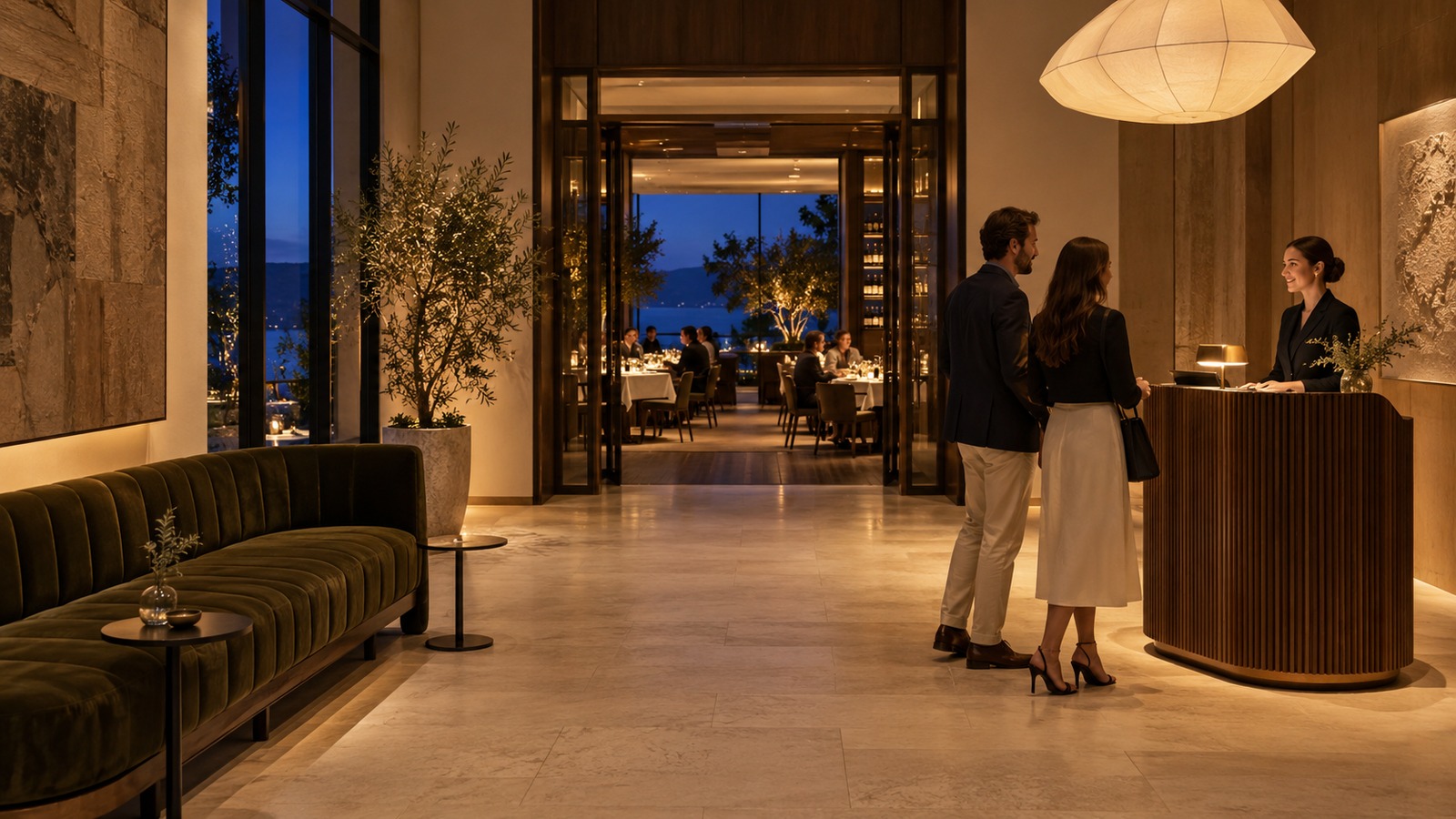
Plan the arrival experience separately from the dining room.
The first impression of a restaurant starts before the first plate arrives. Guests move from the entrance to a waiting seat, pass the bar, and settle at a table. Along that route, they may notice cooking aromas, cleaning products, outdoor air, or a fragrance introduced by the venue.
Restaurant scenting works best when those encounters support the meal. A welcoming entrance can have a different sensory role from a dining room where guests want to appreciate grilled fish, fresh bread, or wine.
For owners, purchasing teams, and designers, the objective is a considered atmosphere with clear boundaries. Start by deciding where added fragrance belongs—and where the restaurant's own food should provide the aroma.
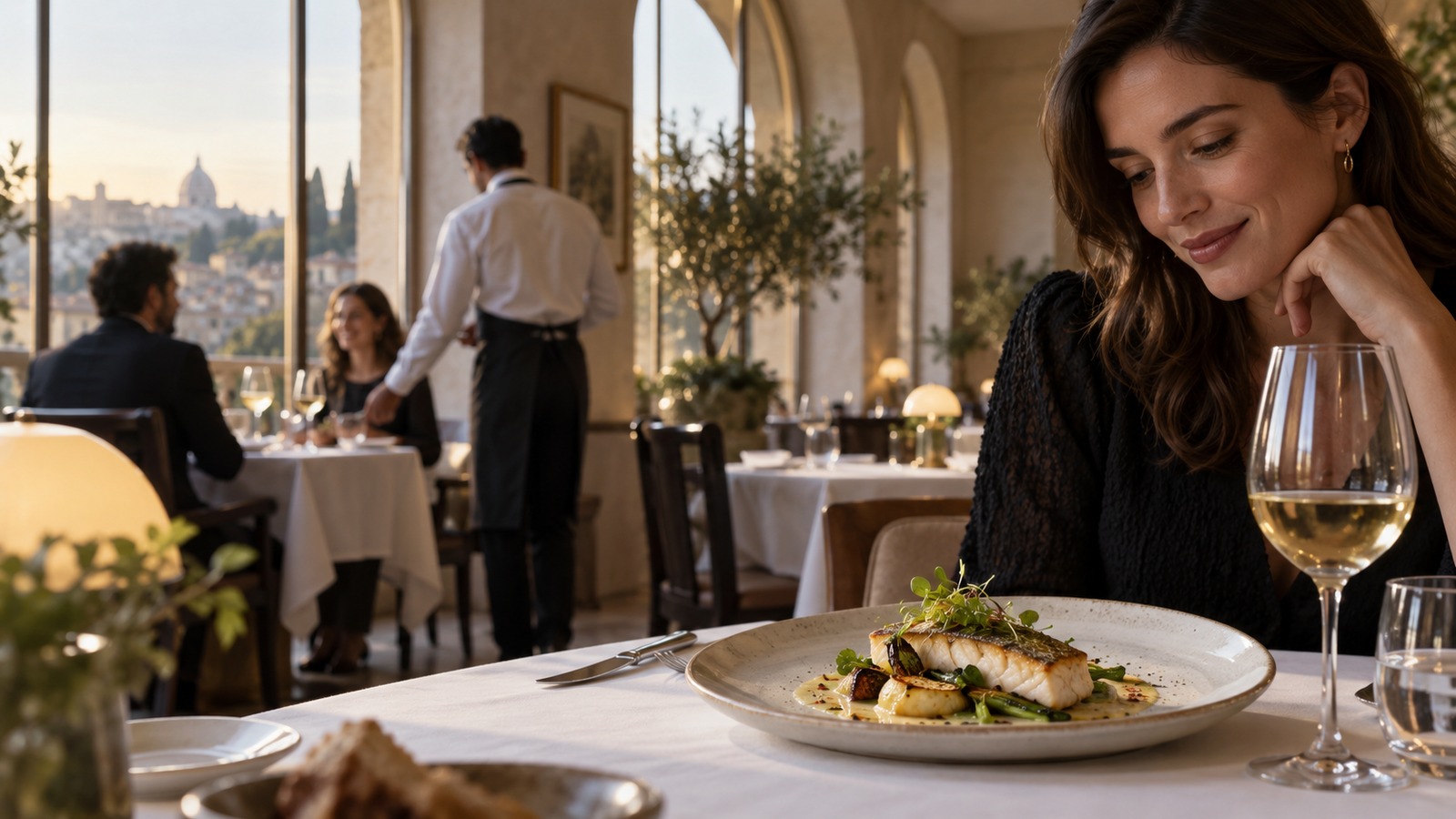 Let food and drink provide the primary aromas at the dining table.
Smell is part of how people experience flavor. The U.S. National Institute on Deafness and Other Communication Disorders explains that chewing releases aromas which reach smell receptors through a pathway connecting the throat and nose.
A practical implication for restaurant scenting is to protect the guest's attention to the food. This is a design recommendation, not evidence that a particular ambient fragrance improves taste or increases spending.
Consider the concept before reviewing fragrance samples. A bakery already has a recognizable arrival aroma. A tasting-menu restaurant may depend on delicate differences between courses. A busy all-day venue with a separate reception lounge may have more scope to evaluate fragrance away from tables.
The appropriate decision can be selective scenting—or no added fragrance in a particular area.
A restaurant scenting plan should follow the guest journey rather than apply one intensity throughout the building.
| Area | Suggested planning approach | Main question |
|---|---|---|
| Entrance and host station | Consider a restrained trial where separation is practical | Does fragrance remain appropriate as doors open? |
| Waiting lounge | Evaluate comfort over the actual waiting period | Does repeated exposure become distracting? |
| Dining room and tasting counter | Begin without added ambient fragrance | Can guests focus on food and drink aromas? |
| Restroom approach | Address cleanliness and air movement first | Can odors or fragrance migrate toward tables? |
| Kitchen and food-service areas | Prioritize source control and ventilation | Is an operational issue being mistaken for a scenting need? |
These are starting points for evaluation, not universal settings. A decorative screen may divide the view without separating the air. Walk the route during service before treating two areas as independent zones.
Restaurant scenting should never become a way to postpone cleaning, drain maintenance, waste handling, or ventilation work.
If an entrance smells of stale cooking oil, identify when the odor appears and where it originates. If a restroom odor reaches the dining room, investigate the underlying cause before choosing a stronger fragrance.
The UK Health and Safety Executive's catering guidance explains that kitchen ventilation removes cooking fumes, vapors, and heat. A fragrance diffuser performs a different function and cannot substitute for suitable extraction.
Ask the facilities team to review problems under normal cooking and door-opening conditions. Resolve the source, then reassess the space without added fragrance. That sequence gives any later trial a meaningful baseline.
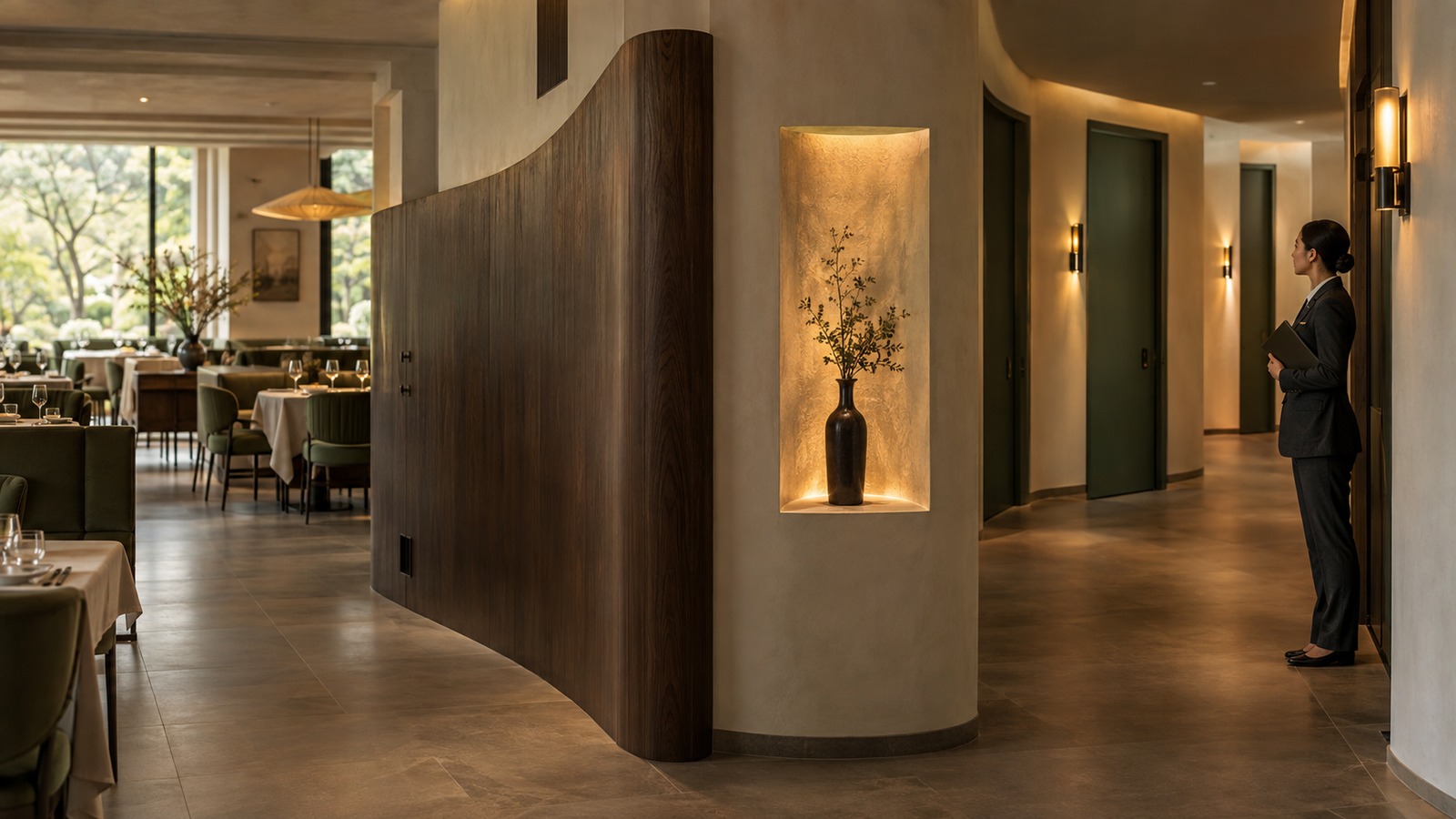
Check scent boundaries during service; visual separation alone does not control airflow.
For restaurant scenting, placement should be judged from both sides of the intended boundary.
Stand at the host station, then at the nearest dining table. Repeat the check when the entrance opens and when the kitchen is active. Ask the person responsible for ventilation to explain the relevant supply, return, and extraction arrangement.
Do not assume a fragrance will stay in the reception area because its diffuser is there. If shared airflow carries it into dining spaces, reconsider the location, operating pattern, or whether scenting is appropriate at all.
Keep equipment clear of guest routes, server turning points, emergency access, and exposed food or tableware. Provide maintenance access and secure cable routing. A discreet installation still needs practical clearance; hiding a unit inside unsuitable enclosed furniture is not a placement solution.
The DANQ Q1000PRO product page lists touch-screen and app control, adjustable operating intervals, and standalone, wall-mounted, or HVAC installation options.
For this restaurant scenting discussion, Q1000PRO is a candidate to assess for a suitably sized, separate arrival lounge—not an automatic recommendation for every restaurant. Ask DANQ to evaluate the layout and confirm the quoted configuration before ordering.
Request a demonstration at the lowest appropriate operating setting for the proposed fragrance and space. If the result remains intrusive, reconsider the application. Avoid selecting a setting simply because the venue's total floor area appears to match a coverage claim.
The chef and service manager should help define restaurant scenting alongside the owner or designer. Their priorities include the menu, beverage service, guest comfort, and the pace of the meal.
Prepare a brief describing what the entrance should communicate, which existing aromas are valuable, and which impressions to avoid. A light tea or soft woody direction might be shortlisted for testing, but no fragrance family is universally suitable for restaurants.
Evaluate candidates away from food preparation first. Then assess the preferred option in the proposed arrival zone while normal service is running. Check the nearest tables as well as the source area.
Avoid assuming that a coffee, citrus, or bakery-inspired name makes an oil suitable for food contact. Ambient fragrance oil is not a culinary ingredient. Confirm its intended application, documentation, and compatibility with the supplied equipment.
Restaurant scenting needs checks at more than one moment of the day.
Before opening, cleaning-product odors may still be present. During the first arrivals, entrance doors move frequently. At peak service, cooking and occupancy change the environment. Later, the same fragrance may feel more noticeable as activity decreases.
Start with restrained settings and observe each period. There is no universal work-and-pause cycle that can be copied from one restaurant to another.
Keep a simple record of the approved oil, settings, operating periods, and person authorized to make adjustments. When a guest reports discomfort or interference with the meal, pause the relevant operation and investigate. Do not respond by dismissing the feedback because staff no longer notice the fragrance.
Consider a hypothetical 90-seat restaurant with a separate waiting lounge, an open dining room, and a side corridor leading to restrooms. This is an illustrative planning example, not a DANQ customer case or a sales-performance claim.
The owner proposes evaluating Q1000PRO in the arrival lounge after confirming suitability with DANQ. The team identifies three checkpoints: the host station, the nearest dining table, and the corridor opening.
During comparable service periods, they record whether fragrance is noticeable, whether it interferes with food aromas, and whether anyone requests an adjustment. They also note door position and unusual cooking or cleaning conditions.
If fragrance remains distracting at the nearest table, the next action is to reduce or pause output and reassess placement. The restaurant scenting plan is accepted only if the intended boundary works in practice. A pleasant first impression alone is insufficient.
Restaurant scenting feedback should fit into existing service routines. A long survey is unlikely to be completed consistently during a busy shift.
Use a short observation sheet with these fields:
Date, service period, and checkpoint.
Approved fragrance and current setting.
Fragrance perception: absent, subtle, noticeable, or intrusive.
Any effect on appreciating food or drink aromas.
Guest or employee comments and action taken.
These categories are internal review labels, not exposure limits. Ask both newly arriving reviewers and employees who spend the full shift nearby. Review recurring concerns before changing the approved setup.
Planning your first restaurant scenting trial? Send DANQ your floor plan and proposed scent-free dining areas to discuss the application before requesting equipment.
Once the restaurant scenting boundaries are defined, purchasing can request a more useful quotation.
Specify the proposed location, usable space dimensions, ceiling height, nearby tables, ventilation arrangement, operating hours, and fragrance direction. Use the Q1000PRO product information as a starting point, then obtain the current configuration and installation instructions.
DANQ has manufactured scent equipment since 2009. Its company profile describes exports to more than 180 countries and regions and OEM/ODM support. For procurement, request applicable CE/FCC compliance documents and RoHS evidence for the quoted equipment. Check the scope and validity of any ISO management-system certificate separately.
Supplier credentials support due diligence; they do not replace a restaurant-specific placement and fragrance trial.
Begin with no added fragrance at dining tables, especially where tasting and beverage aromas are central to the experience. If evaluating fragrance nearby, check actual drift during service and stop the trial if it interferes with the meal.
Added fragrance is not a substitute for resolving an odor source. Address cleaning, waste, drainage, and ventilation as appropriate before considering any ambient fragrance. A stronger scent can make evaluation harder without fixing the problem.
There is no universal best fragrance. Start with the restaurant's menu, materials, guest expectations, and separation from dining areas. Shortlist restrained options, then test them in the actual arrival zone with chef and service-team input.
A restaurant scenting boundary depends on layout, air movement, placement, fragrance, and settings. Physical proximity or separate room names do not guarantee separation. Confirm application suitability and assess both the arrival area and nearest tables before approval.
Successful restaurant scenting begins with a clear boundary: guests should enjoy the welcome while remaining free to appreciate the food and drink they came for.
Send DANQ your restaurant layout, arrival-zone dimensions, service hours, and areas where added fragrance is unwanted. Include relevant ventilation information and your preferred fragrance direction.
Request a Q1000PRO application review, quotation, and sample options to build a proposal around your restaurant's actual conditions.

Professional manufacturer, since 2009.
Spreading the scent of love all over the world.


Guangzhou DANQ Environmental Technology Co.,LTD