Professional manufacturer, since 2009.
Spreading the scent of love all over the world.


English
Categories
New Blog
Car Dealership Scent Strategy: How to Improve the Test-Drive Experience and Sales Conversion September 03 , 2026
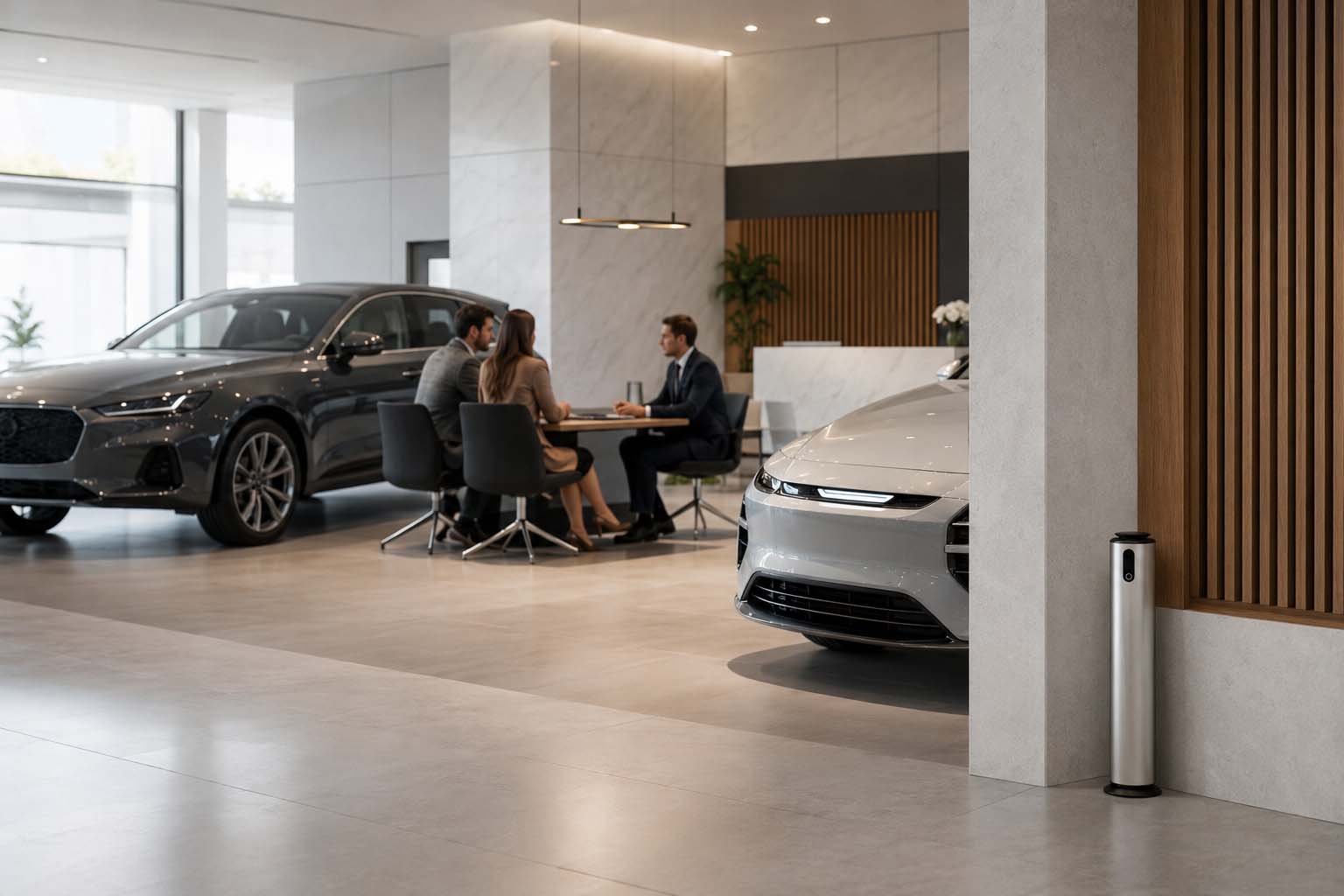
A floor-standing diffuser should sit along the showroom perimeter—not in customer or vehicle traffic paths.
Buying a vehicle is a high-consideration decision. Customers may compare specifications and prices online, but the showroom visit still shapes how the brand, the vehicle and the sales process feel in real life.
That physical experience matters. In a 2025 YouGov survey of Americans who had recently visited an automotive showroom or dealership, the ability to test-drive was one of the leading reasons the in-person experience mattered. Respondents also valued prompt attention and a comfortable atmosphere, while a pushy sales pitch was the most frequently cited cause of a negative experience.
Scent cannot compensate for unclear pricing, poor service or an unavailable test-drive vehicle. Used carefully, however, it can become a quiet part of a comfortable, coherent and memorable customer journey—from the entrance to the consultation table, test drive, vehicle delivery and return service visit.
This guide explains how dealership groups, automotive brands and scent-solution buyers can plan that journey, select suitable equipment and measure results without making unsupported sales claims.
Claims such as “scent increases dwell time by 20%” are common in marketing materials, but they should not be treated as a universal dealership benchmark.
A frequently cited field experiment observed more than 400 shoppers in a home-decoration store. Customers exposed to a simple orange scent spent about 20% more than customers in the complex-scent or unscented conditions. The peer-reviewed study, published in the Journal of Retailing, linked the result to processing fluency: a simple, easy-to-process scent performed better than a more complex blend.
That finding concerns average spending in one retail setting—not a guaranteed 20% increase in dealership dwell time, test drives or vehicle sales.
Other research offers a more useful strategic foundation. A study in the Journal of Business Research found that a pleasant ambient scent improved brand evaluations, especially for unfamiliar brands. Research on shopping-mall environments also connected ambient odor with how visitors evaluated the environment and their spending responses.
For an automotive business, the responsible conclusion is straightforward: scent can influence environmental and brand perception, but the commercial effect depends on fragrance fit, intensity, service quality, customer mix, space conditions and execution. Dealerships should measure their own results.
A dealership is not one uniform room. The entrance, display floor, consultation area, test-drive vehicle, delivery bay and service lounge serve different customer needs. Using one setting everywhere often creates uneven or excessive intensity.
Build a zone plan before selecting equipment.
The entrance should feel clean, controlled and welcoming. This is where a customer moves from traffic, parking-garage or outdoor odors into the brand environment.
Use a low-to-moderate fragrance level that becomes noticeable only after crossing the threshold. Avoid placing a diffuser directly beside the door, where changing airflow can waste oil and create inconsistent bursts.
For a premium brand, a restrained composition with dry woods, soft leather nuances, tea or mineral notes may complement refined materials. An EV-focused showroom may prefer transparent citrus, green or airy notes. The goal is not to recreate an artificial “new car smell,” but to express the dealership’s intended identity.
The showroom must accommodate moving vehicles, open doors, high ceilings and frequent air changes. It often needs a larger standalone system or an appropriately engineered HVAC connection rather than several small devices placed around the floor.
A floor-standing commercial diffuser such as DANQ M63 can be positioned against a side wall, column or reception backdrop, subject to a site-specific coverage assessment. It should never sit between display vehicles or in a customer walkway.
If the site uses HVAC diffusion, first confirm the air-handling layout, return-air location, operating schedule and whether different zones share the same system. One setting may not suit both a double-height showroom and an enclosed finance office.
Price, financing and trade-in discussions can take time. The scent in these areas should be quieter than on the display floor so customers can concentrate.
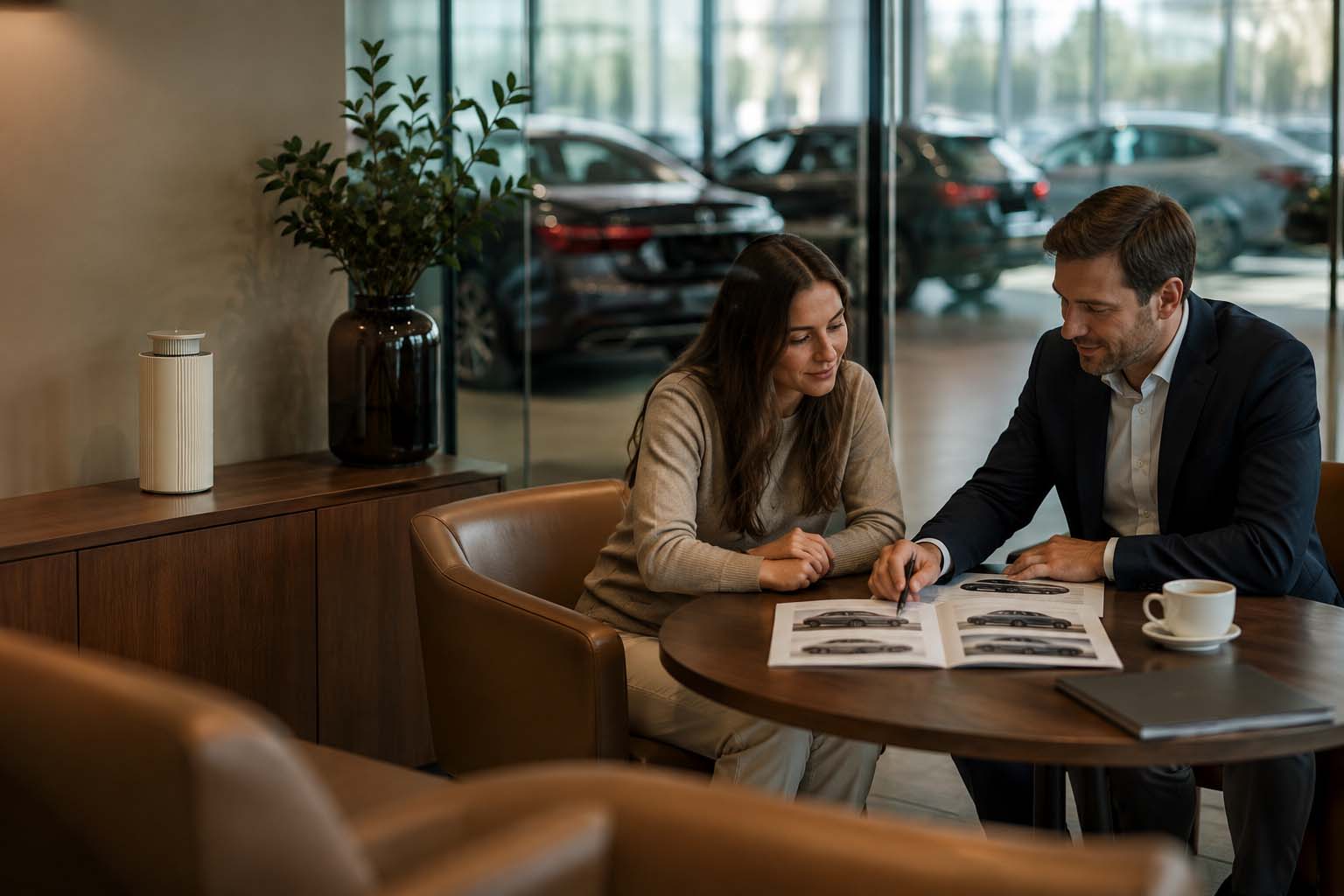
Do not place a diffuser in the center of the consultation table. A compact device can sit on a side credenza, secure shelf or other protected surface, away from drinks, documents and direct customer reach.
Warm woods, tea, soft amber or subtle botanical profiles can create a composed atmosphere without making the space smell like a spa. Select the fragrance through customer testing rather than management preference alone.
A compact desktop diffuser is better placed on a protected side cabinet than on the negotiation table.
The test drive is where showroom expectations meet the product. The cabin should smell clean and neutral before any fragrance is introduced. Remove food, smoke, cleaning-chemical and damp-fabric odors at their source; do not attempt to cover them with a stronger fragrance.
If the dealership uses an in-vehicle scent, make it lighter than the showroom fragrance. The two may share a recognizable note—such as cedar, tea or clean citrus—without being identical.
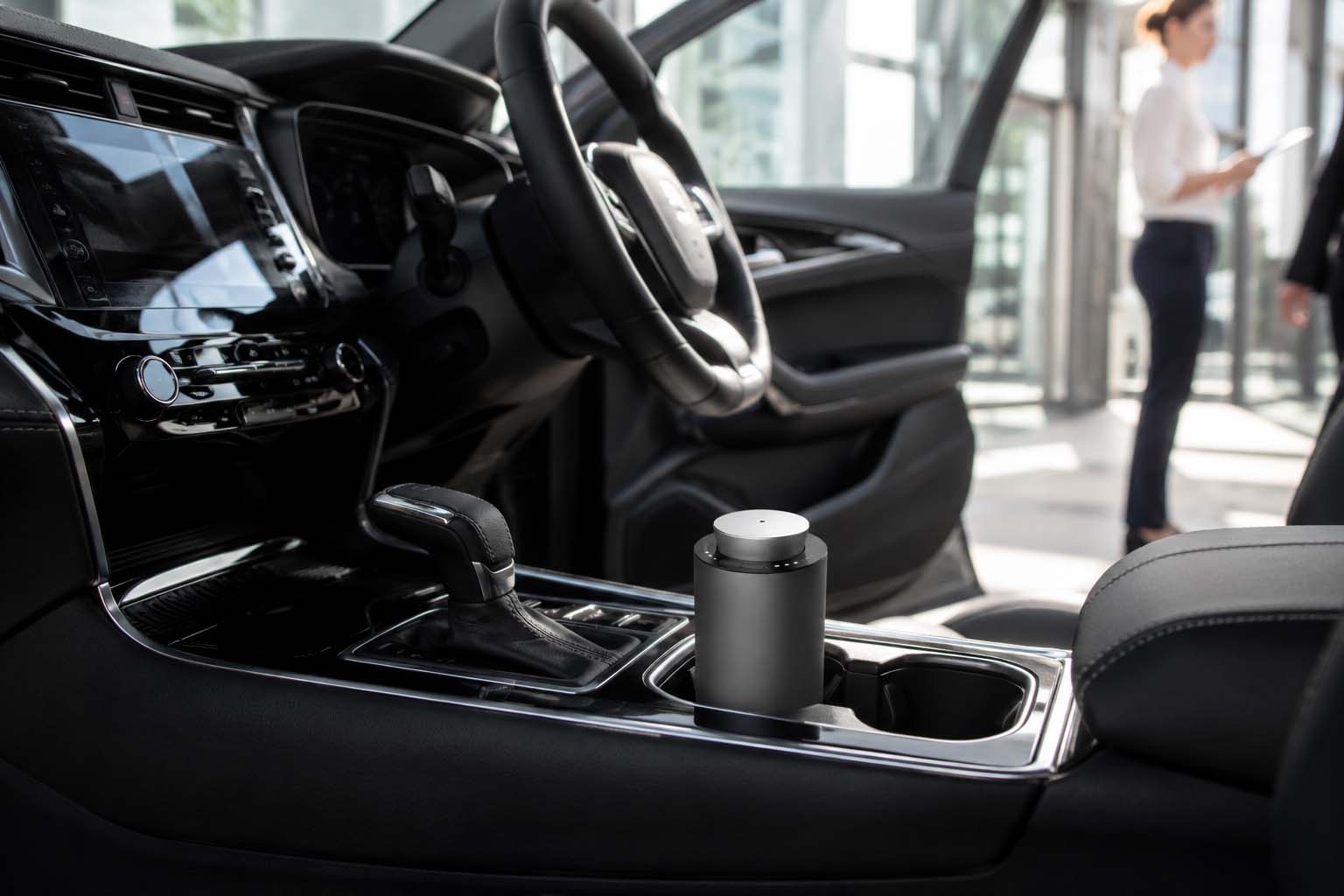
A compact car diffuser such as DANQ H11 can be secured in a suitable cup holder. It must not obstruct controls, visibility, seat movement or driver access. Start at the lowest practical output and allow customers to request an unscented vehicle.
This is especially important because people differ in fragrance preference and sensitivity. A pleasant transition should support the product experience, not become the main thing the customer remembers.
In-vehicle scenting should be subtle, secure and optional, with the diffuser kept clear of all driving controls.
Delivery is a celebration and a powerful memory-forming moment. Keep this zone visually clean and give the customer time to inspect the vehicle, learn the controls and take photographs.
Use the same brand fragrance as the showroom at a restrained level. If the business later offers a matching car-fragrance product, disclose it clearly and provide use instructions rather than pre-installing a strong scent without permission.
Service and repair visits may account for more dealership traffic than vehicle shopping. YouGov found that servicing or repair was the most common reason for respondents’ most recent dealership visit, ahead of test drives and browsing.
The lounge can use a calm, clean fragrance, but the workshop must remain operationally separate. Fuel, rubber, solvent or exhaust odors require ventilation, containment and maintenance. Fragrance is not a substitute for correcting an indoor-air or housekeeping problem.
The right scent is not simply the fragrance most people call pleasant. It should fit the brand, architecture, customer profile and sales context.
Use a brief with four parts:
Brand attributes: innovative, dependable, adventurous, refined or performance-led
Customer state: curious at arrival, focused during consultation, confident before the test drive and rewarded at delivery
Physical environment: upholstery, wood, metal, lighting, showroom scale and ambient noise
Exclusions: notes that feel too sweet, cosmetic, medicinal, aggressive or culturally inappropriate
Shortlist three to five fragrances and test them with coded samples. Ask customers and employees to rate brand fit, comfort, distinctiveness and intensity. Do not reveal descriptive fragrance names until after the first evaluation; labels such as “Luxury Leather” can bias responses.
Simple does not have to mean generic. The retail field research on processing fluency suggests that an easily interpreted scent may outperform an unnecessarily complicated blend. A dealership can still create a distinctive signature by using a clear central direction with restrained supporting notes.
Device selection should follow a site survey, not only the floor area shown on a plan.
Record:
Usable floor area and ceiling height
Open doors and vehicle-access points
HVAC supply and return locations
Operating hours and peak traffic periods
Enclosed rooms connected to the main showroom
Existing odor sources and cleaning schedules
Safe access for refilling and maintenance
Large showrooms generally need commercial-capacity equipment or HVAC integration. Enclosed lounges and consultation rooms may need smaller independent control. Test-drive vehicles require compact, secure devices designed for in-car use.
For multi-location groups, standardize the approved fragrance code, model by zone, starting program, oil-replacement process and complaint escalation procedure. Final settings should still be commissioned locally because airflow and climate differ by dealership.
Do not judge a scent program only by whether senior managers like the fragrance. Define one commercial hypothesis and collect a baseline.
Example hypothesis:
A subtle, brand-matched fragrance across the showroom and consultation lounge will improve customer comfort and increase completed test-drive conversations without increasing complaints.
Track at least two weeks of baseline data, then run a four-to-six-week pilot. If possible, compare matched locations or alternate test and control periods while keeping promotions, staffing and opening hours as stable as possible.
Useful measures include:
Walk-in to test-drive booking rate
Test-drive booking to completion rate
Average showroom and consultation time
Quote-to-order and test-drive-to-order conversion
Customer comfort and brand-fit survey scores
Employee feedback and fragrance complaints
Oil consumption, maintenance time and total operating cost
Do not treat longer dwell time as success by itself. Customers may stay longer because they are waiting for attention. Combine dwell time with prompt-service data, test-drive completion and customer feedback.
Set decision rules before launch:
Scale: target metrics improve, feedback is positive and operations remain stable.
Adjust: customers respond well but intensity, fragrance direction, placement or schedule needs refinement.
Stop: complaints persist, the priority metric does not improve or the program cannot be operated consistently.
Commercial fragrance programs should be subtle, documented and easy to adjust.
Request the Safety Data Sheet and the documentation required for the destination market and intended application. IFRA explains that its Standards may prohibit, restrict or set purity criteria for certain fragrance ingredients. An IFRA Certificate of Conformity is provided by the fragrance supplier; it is not issued by IFRA itself and does not replace local regulatory compliance or a full safety assessment.
Dealership operating procedures should include:
Start-low commissioning and a defined maximum setting
An unscented test-drive option
Fast reduction or shutdown after a complaint
Ventilation and cleaning checks before increasing fragrance
Staff training on refilling, storage and spill response
Batch identification and change control for fragrance oil
Avoid claims that a scent diffuser purifies air, removes pollutants, reduces anxiety or guarantees higher sales unless the exact product and claim are supported by appropriate evidence.
There is no universal best scent. Premium dealerships may prefer restrained woods, tea, mineral or leather-inspired directions; EV showrooms may prefer clean citrus, green or airy profiles. Brand fit and local customer testing matter more than following a generic list.
They can share a recognizable note, but the vehicle should usually be lighter. Cabin volume is much smaller, so a showroom setting cannot be transferred directly to a car.
Scent may support environmental evaluation, brand perception and comfort, but no credible universal percentage applies to every dealership. Measure test-drive and sales metrics in a controlled pilot and avoid attributing all changes to fragrance.
Place it where airflow can distribute fragrance without blocking customers or vehicles. Floor-standing units should sit along a wall, column or protected perimeter. Desktop units belong on secure side surfaces. Car diffusers must be fixed in a suitable holder and kept clear of driving controls.
Start below the level management initially expects. Ask first-time visitors and employees for feedback, then adjust gradually. The target is a consistent background impression, not a visible or overpowering cloud of fragrance.
An effective automotive scent strategy connects brand identity, customer journey, equipment placement, staff operations and measurable outcomes. It does not rely on a recycled “20%” statistic or assume that a pleasant smell will close a vehicle sale.
Map the customer journey, select a fragrance that fits the brand, place each diffuser safely, run a controlled pilot and scale only after the data supports the decision.
DANQ has focused on scent-diffusion equipment manufacturing since 2009 and supports commercial, HVAC, home and automotive applications, as well as fragrance oils and OEM/ODM customization. For a dealership or multi-location automotive project, share your floor plans, ceiling heights, HVAC information, operating schedule, test-drive fleet and target markets. The team can help recommend suitable equipment categories, prepare sample options and define a repeatable pilot configuration.
Contact DANQ Aroma to discuss an automotive scent project
YouGov: What Americans want from the auto dealership and showroom experience
Morrin and Ratneshwar: The Impact of Ambient Scent on Evaluation, Attention, and Memory
Chebat and Michon: Impact of Ambient Odors on Mall Shoppers’ Emotions, Cognition, and Spending

Professional manufacturer, since 2009.
Spreading the scent of love all over the world.


Guangzhou DANQ Environmental Technology Co.,LTD