Professional manufacturer, since 2011.
Spreading the scent of love all over the world.


English
Categories
New Blog
OEM Scent Diffuser Development from Product Brief to Mass Production November 13 , 2026
An OEM scent diffuser development process works best when each decision leaves a clear record. Start with the application and exact product configuration, confirm the feasible customization scope, evaluate a sample, approve the production reference and packaging, then agree how the production batch will be checked and released.
For a buyer building a fragrance brand, the difficult part is often turning phrases such as “premium finish” or “easy operation” into requirements that a supplier can demonstrate. The resulting documents should help purchasing, engineering and operations teams make the same decision.
This guide uses the A800L as an illustrative planning example. The checkpoints below are a framework for discussion with a supplier. The final scope, approval sequence, minimum order quantity and schedule belong in the agreement for the specific project.
Begin with the customer and environment. Will the product be sold through distributors, demonstrated in a showroom or supplied to individual venues? Record the target market, expected operating hours, placement conditions and the person who will refill and adjust it.
For an A800L proposal, describe a floor position with access for routine care. Its tall column makes the relationship with furniture, circulation and the outlet position relevant. Include ceiling height and ventilation when describing the room. Floor area alone gives an incomplete picture of a scenting requirement.
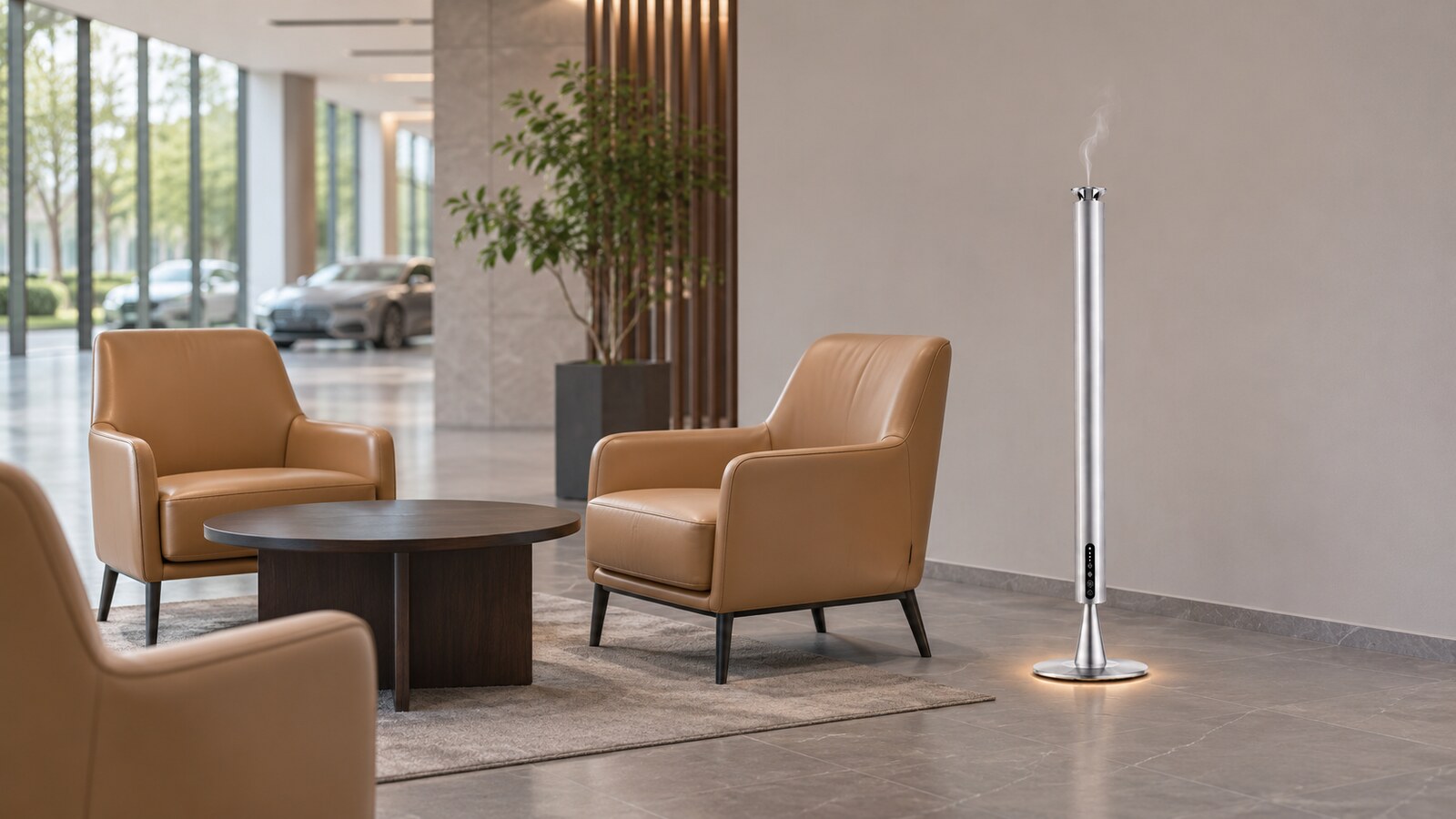
For an illustrative A800L brief, a buyer might specify a retail consultation area, a floor-standing position beside seating and staff access to the controls. The brief would then state the required product version, packaging language and acceptance process. These are example fields for planning. Actual room conditions, buyer requirements and agreed quantities should replace the example before a sample is ordered.
Separate essential requirements from preferences. An essential requirement may be operation through the supplied local controls. A preference may concern packaging appearance. Naming an owner for each approval helps the supplier direct a technical question to the right person.

A model name should lead to an agreed configuration sheet. Record the product version, dimensions, materials, controls, supplied accessories and documentation revision. A showroom photograph can support the discussion, while the approved specification defines the ordered product.
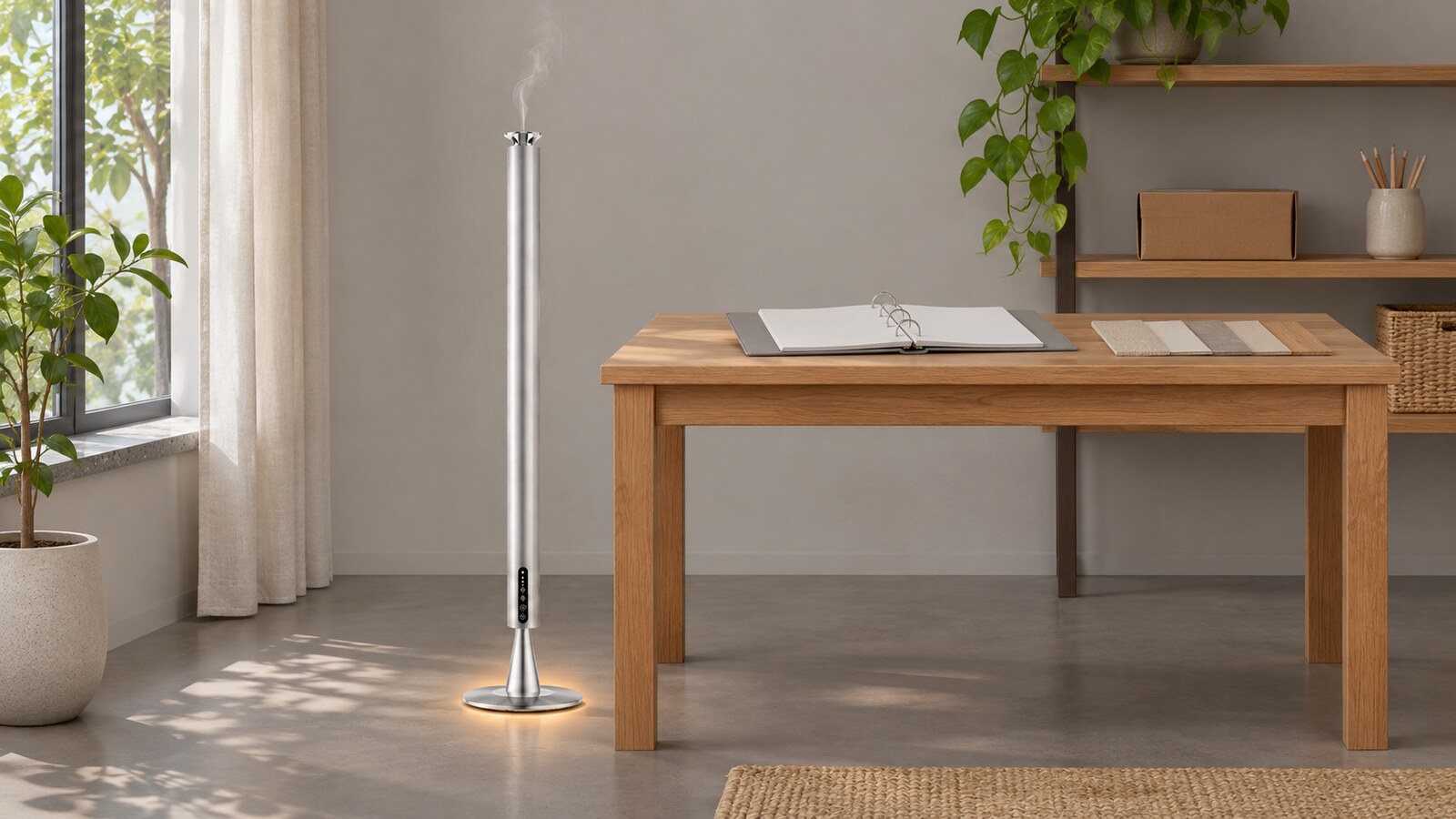
The supplied A800L information describes a silver floor-standing unit with a 200ml reservoir, a 10400mAh battery and ambient lighting. Its specified dimensions are diameter 189mm by height 1031mm, with a nominal coverage volume of 300m³. The listed noise figure is ≤38dB.
Use these details as the starting reference for this example. A battery capacity needs an operating profile before it can support a runtime claim. A coverage figure needs a representative room assessment. Agree how any advertised performance will be demonstrated on the ordered configuration.
If Bluetooth operation is included in the project, identify the applicable version and supplied app. Request a demonstration of the specific functions needed. Keep software requirements attached to that version rather than assuming them from the model name. The published A800L overview provides additional configuration context. Review the A800L overview.
Translate the branding request into separate deliverables. Possible discussion items include logo artwork, its position, packaging design, manual language, finish requirements and any requested functional changes. Availability must be confirmed item by item for A800L.
Distinguish adapting an existing platform from requesting a design change. A packaging artwork revision may affect print approval. A change to the enclosure, electrical arrangement or software behavior can require additional feasibility work and validation. Ask the supplier to explain the impact before approving the revised scope.
Keep a visible boundary between the confirmed scope and requests still under review. If custom app appearance is requested, describe the screens and deliverables being discussed. Software ownership, account support and future updates need their own agreement where relevant. A branding request by itself does not establish additional operating features or a particular support arrangement.
Record the method, reference and acceptance rule for each agreed item. For example, a logo request needs approved artwork, dimensions and placement. A finish request needs a physical or documented reference and an agreed inspection approach. “Same as the picture” leaves room for conflicting interpretations.
Request a quote that identifies the exact configuration, quantity, included accessories and packaging basis. Clarify sample charges, any development or tooling charges, printing setup, documentation work and the treatment of later revisions where applicable.
Confirm the MOQ for the particular combination of product and customization. A standard configuration and a newly requested finish can have different purchasing constraints. Obtain the actual figure for the proposal instead of carrying a quantity from an unrelated product into the A800L discussion.
For timing, identify what starts each stage. Sample preparation may depend on artwork or component confirmation. Production planning may depend on sample approval, packaging approval and agreed commercial arrangements. Record the dependencies, approval owner and revision cut-off so that a proposed date has a clear basis.
A useful schedule also shows how unresolved questions will be handled. If the sample review raises a new control requirement, document the revised scope and its effect on price, validation and delivery before progressing.
Agree on sample acceptance before the sample arrives. Prepare checks for appearance, configuration, operation, fragrance compatibility and the intended environment. Each check should state the method, expected result, person responsible and evidence to retain.
For A800L, begin with the silver finish, straight column, top outlet, lower control area and circular base. Compare the sample with the approved reference and agreed dimensions. Record any cosmetic or assembly concern with clear photographs and an identifiable sample reference.
Next, demonstrate the functions included in the supplied version. Check the physical controls, lighting selections and any agreed connected operation. Follow the delivered instructions for power, charging, filling and routine care. Requested behavior after an interruption should have an agreed test and expected result.
Then trial the intended fragrance in a representative space. Record the fragrance identification, operating settings, room conditions and observation period. Assess scent from occupied positions and listen from normal seating or standing locations. Preserve the conditions with the result so another reviewer can repeat the assessment.
Keep open points in a single list. Give each issue an owner and a disposition such as correction, retest or accepted deviation. A decision to proceed should identify the configuration and any remaining agreed action.
After corrections are accepted, establish the production reference. Buyers sometimes call this a golden sample or approved sample. Its value comes from a unique identifier, linked specification and written approval that purchasing and production can retrieve.
Approve the associated packaging at the same stage. Check the product fit, accessory locations, protective arrangement, artwork, model identification and manual revision. A photograph of a closed carton provides little information about how a long floor-standing product is supported inside it.
For A800L, review protection of the column, top outlet and base within the proposed packing arrangement. Confirm whether the fragrance bottle is supplied empty and how accessories are listed. Any transport validation should identify the actual packing configuration, method and acceptance criteria.
Match the commercial images and instructions to the approved product. A change in logo position, controls or supplied accessories can affect both. Keep the files in one controlled revision set and record who can authorize subsequent changes.
Where pilot production is part of the agreed plan, use it to assess whether the proposed assembly and packing process can reproduce the approved product. Record the batch scope, inspection activities, observed issues and the decision needed before larger-scale production.
Discuss which checks occur during production and which occur at final release. Depending on the agreed configuration, these may include appearance, assembly, control functions, fragrance delivery and packing checks. Any extended operating check needs a defined profile, duration and acceptance rule.
For A800L, a light turning on is only one observation. A review should demonstrate each agreed function and connect the result to the applicable sample or batch. Where an issue is found, document its scope, corrective action and the recheck used to close it.
Set final release requirements before the batch is ready. Identify the agreed inspection coverage, acceptance criteria, records, shipment quantity and authority to approve release. Include how damaged or nonconforming units will be handled. DANQ's testing article gives further context on functional checks and burn-in. Read the testing guide.
An OEM project continues through delivery and repeat orders. Assemble the final configuration, packaging artwork, instructions, inspection records and agreed support information so that the buyer can receive, distribute and service the ordered version.
For installations, record the operating settings, fragrance used, placement and person responsible for refills. A documented handover helps a distributor explain the same product consistently across locations. The first representative deployment can also reveal practical questions that a short sample demonstration missed.
Agree on support responsibilities before distribution begins. Record the route for reporting a fault, the information needed to identify the unit and the agreed treatment of spare parts or returns. The commercial warranty terms should match the ordered product and destination. Having this information available helps operations staff respond consistently when an installation needs attention.
For repeat orders, use the approved revision as the starting point. Ask for proposed changes in writing, including the reason, affected components or functions and the validation needed. Update the reference, documents and approval record before a revised version is supplied.
Before moving to the next stage, make sure your team can answer these questions.
Which A800L configuration and document revision are being approved?
Which branding or functional requests have been confirmed as feasible?
What evidence closes the sample review, and which issues remain open?
Are product, packaging and instructions on matching revisions?
Which tests and acceptance rules govern production release?
Who approves changes, and how will repeat orders be identified?
Keep the answers short enough to use in a working approval record. Link supporting photographs, demonstrations and inspection results to that record. A shared folder helps when its files have consistent names, revision identifiers and an owner responsible for replacing obsolete references.
Include the target market, intended environment, product configuration, quantity, installation method and expected operating needs. Add branding requests, packaging, language and documentation requirements. Separate essential functions from preferences, name the approval contacts and list any unresolved questions so the supplier can assess the scope and propose a sample plan.
A photograph helps communicate appearance, but branding needs an agreed specification. Confirm the artwork, position, size, method and acceptance reference for the particular project. Obtain approval of the actual sample and packaging. Any requested change to the standard appearance should have feasibility, cost and timing confirmed before production.
A sample is supplied for evaluation. An approved production reference is the specific version linked to accepted documents and written authorization for production. Identify it clearly, retain its review records and connect it to packaging and instructions. Agree how it will be stored and used when checking later batches.
The applicable quantity and schedule depend on the confirmed configuration, customization, materials, packaging and approval work. Request a project-specific proposal. Define which approvals and commercial arrangements start the production timeline, and record how later changes affect it. A quotation from another product is an unreliable planning basis.
Use the intended fragrance and an agreed operating setting in a representative space. Record ventilation, room layout and observation positions. Compare operating sound under defined conditions, including background noise and measurement method where numerical acceptance is required. Keep the results with the sample identifier and the supplied configuration.
Approve after the required sample corrections are closed, the configuration and packaging references are accepted, and production acceptance rules are agreed. Where pilot production is included, review its outcome first. The authorization should identify the version, quantity and outstanding agreed actions so that the supplier has a documented release basis.
Prepare your target market, intended application, proposed quantity, required configuration and branding requests. Share the brief with DANQ to discuss the feasible scope, sample evaluation and approval steps for an A800L project. Request written confirmation of the applicable MOQ, schedule, packaging and support arrangements before approving the order.

Professional manufacturer, since 2011.
Spreading the scent of love all over the world.


Guangzhou DANQ Environmental Technology Co.,LTD